
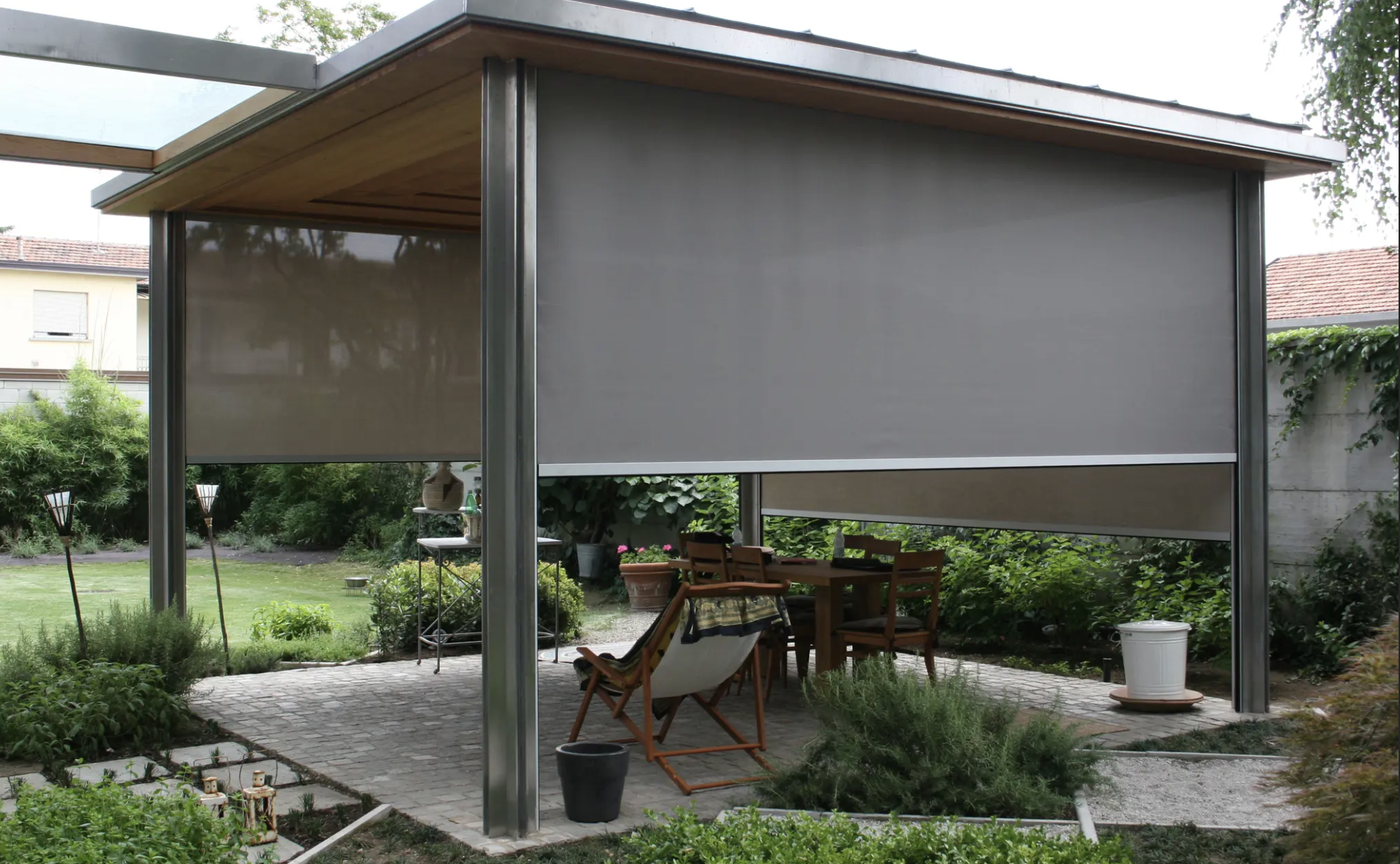
What Is a Concealed ZIP Screen?
A concealed ZIP screen is an exterior textile blind whose head box is built into the facade, lintel or insulation layer, so only the fabric and slim side guides remain visible. The fabric edges are locked into the guides by a zip-style connection, which keeps the screen taut and closed at the sides. Because the cassette is hidden behind plaster or cladding, it shades the glass from outside without a visible box above the window.
The key condition is timing. A concealed installation must be planned before the facade is insulated and plastered. If that window has passed, a surface-mounted ZIP screen is usually the practical alternative.
The Concealed Head Box Explained
The head box holds the roller tube, the rolled-up fabric and, in most cases, the motor. A standard ZIP screen mounts this box on the facade or under the lintel. In a concealed version, the box sits in a prepared recess and is then covered by insulation, render or cladding. Only a narrow slot remains at the bottom for the fabric to travel through. A removable revision cover keeps the mechanism accessible for maintenance.
When Is a Concealed ZIP Screen Suitable?
- New builds, while window openings, lintels and facade layers are still being designed.
- Major facade renovations, especially when external thermal insulation is being added.
- Window replacement combined with lintel or reveal work, when the opening is already being rebuilt.
- Architect-led projects where shading should be invisible when retracted.
On a finished facade, a concealed system generally means cutting into insulation and render. In that case, a visible but neat surface-mounted ZIP screen is often the better choice.
Planning Requirements Before Insulation and Plaster
Every concealed ZIP screen depends on decisions made early. Dimensions vary by product, fabric and window size, so the exact figures should always come from the system specification for your project.
Head Box Space
The recess above the window must fit the chosen box size, which depends on screen height and fabric thickness.
Side Guide Space
Reveals need room for the guide rails, either fixed to the window frame or set into the insulation.
Motor Power Supply
A cable must reach the head box before plastering. Plan switch, sensor or smart-home wiring at the same time.
Service Access
A revision cover must stay openable, so motors and fabric can be serviced without damaging the render.
Fabric Choices
Motorized Control
Concealed systems are typically motorized, since a manual crank would need a visible wall penetration. Control options include wall switches, remote controls, smart-home integration and sun or wind sensors that move the screens automatically within the limits set by the manufacturer.
Compatibility Limitations
- Finished facades rarely allow concealment without significant render and insulation work.
- Very large openings may exceed single-screen limits and need splitting.
- Thin insulation layers may not leave enough depth for the head box.
- Listed or protected buildings may have facade restrictions.
Concealed ZIP Screens in Budapest and Pest County
MyShading supports new builds and facade renovations across Budapest and Pest County, from family houses to apartment projects. We recommend contacting us at the design stage, ideally before window ordering, so head box recesses, guide positions and cabling can be agreed with your contractors.
Frequently Asked Questions
Can a concealed ZIP screen be added to an existing house?
Only if the facade is being reworked. Otherwise, a surface-mounted ZIP screen is usually more practical.
How is the motor serviced if the box is hidden?
Through a removable revision cover planned into the head box, without breaking the plaster.
Does a concealed ZIP screen shade better than a visible one?
Shading performance depends on the fabric, not the box position. Concealment mainly improves appearance.
When should I request a quote?
Before insulation and plastering, ideally while window details are still being finalized.
Planning a Concealed ZIP Screen?
A concealed ZIP screen delivers invisible, integrated exterior shading when planned before the facade is closed. Share your plans early and we will help coordinate the details.